• Facebook
    • Google+
    • Twitter
    • Get new posts sent to your inbox!
      Enter your email address below:

  • Sunday, March 31, 2013

    Photography: Bleeding Heart


    This wasn't actually taken from a trail like my other photos, but I liked it so wanted to include it here. I took it in my old backyard before leaving for the Appalachian Trail. This may surprise you, but I used to have a house before I started all this.

    You can support my blog by ordering a print of this photo in my Etsy store. Use coupon code 5OFF2013 and receive $5 off any purchase of $15 or more.

    THE STORY BEHIND THE PHOTO...

    There isn't much of a story actually. The woman who lived in the house before me had the two-acre property looking  like a city park. There were several species of trees, a creek, and a wide variety of wild flowers. The first year I lived in the house, I never knew what flowers might pop up next. This one was my favorite.

    The lack of a story for this photo is the biggest endorsement I can give for getting out and seeing the world. Living for the anecdote is a great way to ensure you'll live an adventurous and fulfilling life. 
      
      
    Creative Commons License
    A Backpacker's Life List by Ryan Grayson is licensed under a
    Creative Commons Attribution-NonCommercial-NoDerivs 3.0 Unported License.
      

    Saturday, March 30, 2013

    The Before Interview with Victor Maisano, 2013 Appalachian Trail Thru-Hiker

    Earlier today, Victor Maisano officially began his thru-hike of the Appalachian Trail (you can follow him and his crew at BackpackingAT.com). 

    If you're reading this you probably know I've been answering some of his questions about the trail. Before he left I turned the tables and asked him a few. I thought it would be interesting to ask them before and after to see if, and how, his answers have changed. 

    The first few questions, however, I asked because I like knowing what motivates others to take on such a challenge. Are they an adventurer discontented by a cubical life? Do they just want to challenge themselves?  Did they conceive the endeavor when things in life seemed to be falling apart or when everything finally came together? 

    Hundreds of people head to the Appalachian Trail with a unique story and personal motivation. I love seeing how all their stories converge.

    RG: When did you first hear about the Appalachian Trail?

    VM: I believe I first learned about the Appalachian Trail in Boy Scouts. There is a fifty-miler badge I always wanted to get, but never had the chance to earn.

    RG: When did you start dreaming of doing it? Or what finally inspired you to take this on?

    VM: Oddly enough when I was in Costa Rica. Even though I was living the Caribbean dream and saving turtles 24/7, the water always seemed to be clearer in the other pond. Throughout my thought process of "what is next" after volunteering at a Sea Turtle Conservatory, I knew I was not ready to head back to a "normal" life back in the corporate world full time. So looking to challenge myself physically and mentally the Appalachian Trail came easily to mind. My mind was fully set after skimming a couple of articles online and bouncing around previous AT thru-hikers blogs. I would imagine myself in their shoes/pictures!

    RG: What are you most looking forward to?

    VM: Meeting great people, seeing random animals (other than the ones you find in suburbia) and attempting my wilderness survival skills from time to time.

    RG: What do you hope to get out of this experience?

    VM: New perspective from this hiking community and learn all that I can from the experience that I would not have from reading about it.

    RG: What was your first big adventure? 

    VM: I would like to think my first big adventure was when I headed to Vietnam for 2 months with my older (adopted Vietnamese) Brother when I was 15ish. Sleeping on dirt floors, eating interesting meals (including dog) and being the only white person in these small villages was certainly an eye opener for what the vast opportunities the world has.

    RG: There are a lot of unknowns that you wonder about when planning a hike like this. What are you biggest concerns?

    VM: To be honest it's power. I plan to be very social media savvy and fear the amount I want to update will not correspond with amount of juice I am bringing - granted I am bringing solar panels through the green tunnel. Other than that it's my lack of Knives. At the moment I am bringing a smaller sized serrated knife. Seeing as He-Man and Leonardo were able to protect themselves from all sorts of enemies, I figured that's what I need. However I know that Skeletor nor the Shredder will be anywhere near the trail. 

    RG: What is your current pack weight?

    VM: Yikes sensitive topic. I think right now it's 45ish lbs.

    RG: I agree it can be a sensitive question. It's often followed by someone with an ultralight pack telling you you're doing something wrong. I only ask because I want to see if, and how much, it changes by the time we do this interview again. So, what is your favorite gear item right now?

    VM: To be honest it's my Osprey 65L Backpack. Never before in my life had I had a backpack that of a quality nature. This pack feels like I am giving my little nephew a horsey back ride and he's holding on tight!

    RG: How are you preparing (physically, or mentally)?

    VM: Physically I am not - I am solely relying on my youth to start me off. I know this not the smartest idea, but I feel my body is very adaptable. Plus I won't complain even if was having a hard time.

    Mentally - I have been trying to imagine myself on the trail and going through the various scenarios. Reading other peoples blogs and just speaking with previous section and through hikers has been great as well!

    RG: Yeah, physically the best way to prepare is to backpack before heading out, which can seem a bit redundant if you're not trying to break a speed record. Have you backpacked before? What's the longest you've ever hiked?

    VM: I have backpacked 2 sections of AT Before. Both in/near the Smoky Mountains, with a small group of friends for 50 miles over 4 days.

    RG: Do you have more adventures in mind after this one?

    VM: Next adventure is TBD. I would not mind switching back and forth between water and land based adventures. My mind has been definitely wandering, but my bank account says I need a job BADLY. Perhaps I can combine the two?

    RG: Combining the two is a dream of all wanderers, but the good news is many find a way. And the Appalachian Trail can make anyone realize how little income and possessions they really need, which will get you halfway there.

    Last question, do you have a trail name yet or do you prefer the tradition of letting it happen on the trail? Some people prefer to go into it with a name already chosen to avoid a bad name. For example, for most of my hike I was called Nancy Drew, but not everyone will be so lucky.

    VM: I do not have a trail name. I would prefer the traditional route. However I have a feeling with my personality and friends, this will be very random and most likely not reflect me. But I'll go with it.

    RG: I'm sure we'll find out very soon what it will be on your blog at BackpackingAT.com. Thanks for your time Victor and good luck out there! 

      
    Creative Commons License

    Tuesday, March 26, 2013

    Q&A: Bugs and Other Pests on the Appalachian Trail

    Victor asks for tips in dealing with pests and other natives of the Appalachian Trail, such as Ticks, Flies, Mice, Poison Oak, Poison Ivy, and any others not on his radar. I’m going to break his question up in parts.

    First, let me just remind you that Victor's hike begins this Thursday (March 28th), join me in following his progress at BackpackingAT.com.

    VM: From what I hear, knowledge is power. Is it true that learning how to prevent visitors is half the battle, or is it inevitable?

    RG: Yes and yes. There are ways to reduce potential issues with the bugs and wildlife, but it comes with the territory. There are different guidelines for different pests that I’ll go into below.

    Ticks

    VM: Do you have any useful hints for removing ticks? Is it true a drop of turpentine will make the ticks dig themselves out?

    RG: Good question. Ticks are the worst. I'd honestly rather see a black bear on the trail (actually I love seeing black bears, so that's a bad example). I only saw two ticks crawling on me while hiking the AT, but I also met two hikers who contracted Lyme Disease, so it's good to know a few things about them before heading out.

    There are several myths about tick prevention and removal. Using heat or covering the tick with anything in order to coax it back out can only make the problem worse. It can actually cause them to regurgitate more saliva (and potentially more pathogens) into your bloodstream.

    The hypostome, i.e. mouth parts, that they burrow into your skin, looks similar to a tiny barbed harpoon. Also, some ticks, like the Lyme-Disease-spreading deer tick, secrete a cement-like substance to keep themselves securely attached to your skin while feeding. In other words, they can't back out quickly even if they wanted to. The longer the tick is attached, the higher your risk of infection, so the goal is to remove the tick as soon as possible.

    The best way to remove a tick

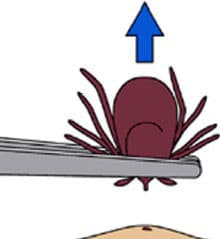
    The best way is with tweezers. Some ticks, like the Deer Tick, can be as tiny as a poppy seed, so you’ll need tweezers that can grab something that small. Grab the tick as close to your skin as possible and slowly pull it straight out. Clean the skin around the bite with alcohol. If the hypostome (mouthparts) remain stuck in your skin, don’t worry about it. Doctors aren't concerned about it, so I'm not either. Also, when the hypostome breaks it may even send germs and saliva further back into the ticks body and saliva glands.

    Lyme Disease

    The biggest concern with ticks on the Appalachian Trail is Lyme Disease. There are 30,000 to 40,000 cases in the United States annually and about three out of four are reported in ten of the states along the Appalachian Trail.

    Here they are in order of highest cases per capita: Vermont, New Hampshire, Maine, Connecticut, New Jersey, Pennsylvania, Massachusetts, Maryland, New York, and Virginia.

    If you experience any symptoms like a rash or fever, consult your doctor and let them know you've been bitten.

    Preventing Ticks

    Chances are you'll hike the entire Appalachian Trail without having a tick burrow into you, but with a few precautions, you can reduce your risk of getting Lyme Disease to nearly zero.

    Do a daily tick check

    Full disclosure, the longer I went without seeing a tick the less frequently I would do a tick check. Eventually, I only checked after hiking through bushy areas with tall grass or loose dry leaves on the ground. My laziness aside, daily checks are by far the best way to prevent the spread of Lyme Disease. It generally takes at least 24-48 hours for a tick to transmit the disease, so if you're doing daily checks, it's unlikely you'll get it.

    Thorough tick checks are important since their saliva has anesthetic properties. That means you won't feel them burrowing or feeding. Additionally, they are hard to find because some, like the deer tick, are as small as a fleck of dirt, which you'll be covered in most of the time. They also have a tendency to search for places on your body that are hard to see without a mirror... and places your friends will not volunteer to check for you.

    Bug Repellent

    I'll go into this deeper below, but DEET is still the most effective bug repellent. Nothing really comes close in effectiveness, duration of effectiveness, and cost per ounce. There are a lot of home remedy bug repellent myths out there, but none have been shown to be effective for more than a few minutes, if effective at all. Don't waste your time or risk going without an effective treatment. A 23 to 33% DEET solution is the way to go and it's safe if used properly.

    Wear Light Colored Clothing

    Even though I didn't have any biting ticks on the Appalachian Trail, I did find a couple crawling on my pant legs. It happened after scouring the woods for firewood in Shenandoah National Park. Since I wore light brown khaki pants they were easy to spot.

    Walk in the center of trails

    Those minuscule SOBs are hanging onto plants with their little legs outstretched waiting for a blood-filled mammal to walk by. Avoid their reach by walking down the center of the trail whenever possible.

    Some months are worse than others

    Peak tick season starts in late-April to early-May and lasts all through summer. That doesn't mean you won’t get ticks on you in October, though. Actually, that's when I found them on me in Shenandoah. In other words, they are going to be around during your entire hike, but they will probably be worse Late-May through Early-August.

    Signs of Lyme Disease

    Check out the Centers for Disease Control's web site for more information, but I'll give you a summary. One of the first signs that you have contracted Lyme Disease, which will normally occur 1 to 2 weeks after infection, is the development of a bullseye-shaped rash around the bite, although sometimes there won't be a rash at all. Lack of energy is another common first symptom, but you'll feel that on your hike either way. Other symptoms include fever, chills, headache, stiff neck, swollen lymph nodes, muscle pain, and joint pain.

    If you do have symptoms, see a doctor as soon as possible. The longer you go without treatment, the worse symptoms will get and it can get incredibly nasty. If you find a bullseye-shaped rash or feel symptoms of the flu, get checked. If you do pull a tick off your body save it in a Ziploc bag so it can be tested later if symptoms do appear.

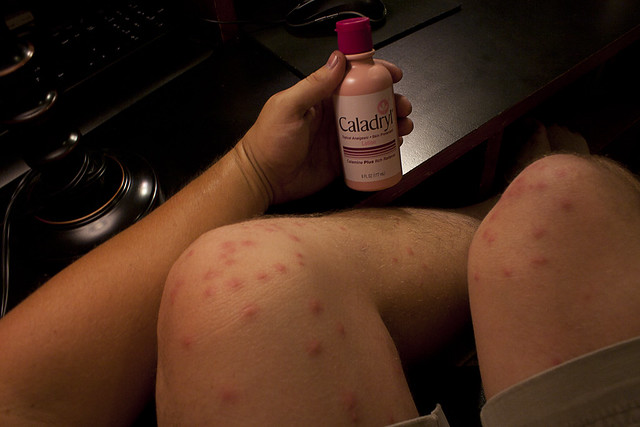
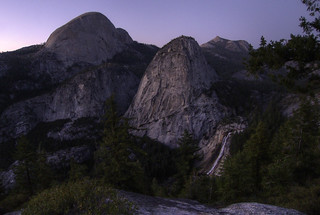
    (Photo: I forgot bug spray on a trip in Southern Indiana)
    Mosquitoes and Black Flies

    Even though, you could hike the entire Appalachian Trail without seeing a tick, mosquitoes may become the bane of your existence. I doubt you'll have much trouble with black flies, since they are worst in Maine from Mid-April through Mid-June.

    Prevention

    There will be days where this seems like an impossible task. There is no way to keep all mosquitoes at bay, but you can prevent them from driving you crazy.

    Bug repellent

    As I said previously, the most effective bug sprays on the market contain 23% to 33% DEET. Several studies, and my own personal experience, have shown that a higher concentration is basically just as effective. I also use Permethrin on clothes, but more on that in a bit.

    I used to carry a 1 oz. eyedropper of 100% DEET oil, but sprays seem to be more effective. The eyedropper is ultralight, but this is where I'll sacrifice a couple ounces. Your happiness and sanity do have value after all. Many people use the eyedropper method by putting a few drops on the back of their neck, lower legs, wrists, and other strategic places, but it is believed that DEET works by surrounding you in a vapor that disrupts the bug's ability to sense humans and other animals. In my opinion, a few drops here and there just don't seem to create enough of this vapor barrier. Some people attract mosquitoes more than others, though, so my experience may not be the same as someone else's. I draw them in like I'm their mecca.

    When using DEET, avoid getting it in your eyes, ears, nose, or on water bottles and food. Also, DEET can dissolve certain plastics, rayon, spandex, and other synthetic fabrics such as the lining in some raincoats. Be careful not to get it on the palms of your hands, so you don't ruin any gear. Since ticks and mosquitoes aren't much of a concern during a rainstorm, wipe any DEET off your skin that may come in contact with the lining of your rain gear before putting it on. A gear expert said DEET was the reason my Marmot raincoat lining was peeling off.

    Is DEET safe?

    DEET sounds horrible, right? After all, it can breakdown certain plastics and synthetic materials. You’re probably thinking, why would I want to put something like that on my skin?! Well, Vodka, vinegar, and Coca-Cola can dissolve a number of things too, but they won’t harm your skin.

    It’s not hard to find someone who believes anything unnatural is going to kill you slowly, but if used properly DEET is safe. Of course, nothing is 100% safe, but don’t forget we are using them to avoid things like Lyme Disease, Rocky Mountain Spotted Fever, and West Nile Virus, which are far worse.

    That said, using it properly is not always convenient on a long distance trail. For example, using it properly means you need to wash it off your skin at the end of the day. Since showers are rare on the AT, and since you don’t want to get DEET in the aquatic ecosystem, you’ll need to go at least 200 feet from a water source to rinse it off. Since mosquitoes are only a problem in warm weather, you won't have to worry about rinsing off when it's dangerously cold. Also, rinsing off is a good practice anyway since cleaning up at the end of the day will make you feel, smell, and sleep better.

    Another potential concern is that most people aren't using DEET heavily for 5 months in a row, so I'm not sure long-term exposure has been thoroughly tested. It wouldn't surprise me if regular long-term use had some negative health effects, so I try to use it in moderation and sometimes switch to a less effective non-DEET repellent when mosquitoes aren't as bad. I'm not suggesting these non-DEET sprays are healthier, but I feel like it can't hurt to avoid using too much of any one chemical.

    Non-DEET Repellents

    Permethrin – Prior to hiking in tick or mosquito season, I apply Permethrin to my clothes. This is not to be used on skin, but it can be effective on clothes for weeks even after numerous washes. If you’re in a buggy area, consider reapplying after about six washes. Of course, follow all directions on the bottle.


    Lemon Eucalyptus – Don’t let the name fool you, just because something is natural, that doesn't mean it’s 100% safe. All the same safety rules apply with all bug repellents. It won’t damage plastics like DEET, but it also doesn't last as long. I found it to be nearly as effective as DEET-based repellents for about 15-30 minutes then starts to wear off quickly, whereas DEET is effective for five hours or more.
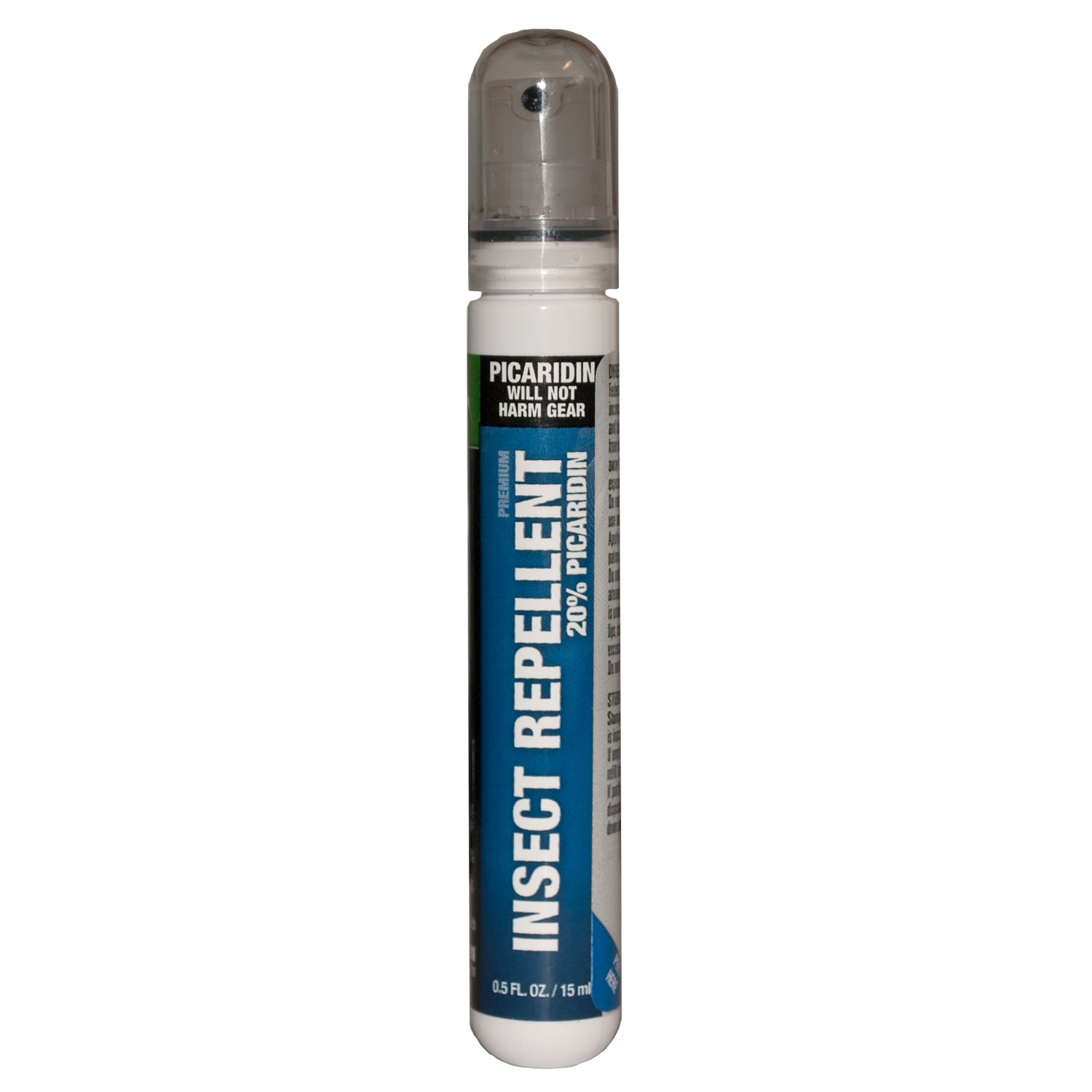
    Picaridin is another pesticide that does not damage plastics, but its effectiveness seems to be about the same as Lemon Eucalyptus.

    One final tip, apply sunscreens before applying bug sprays.

    Home-remedies

    I've heard of several home remedies for repelling ticks and mosquitoes, but at best, they only work for a few minutes and are not even that effective to begin with. I've heard of using dryer sheets, Vaporub, vanilla, smoke, garlic, vitamin pills, or other odor-masking items ingested or rubbed onto the skin. One I hear about often is Avon Skin-So-Soft, but it’s effectiveness only lasts about ten minutes whereas DEET can last five hours.

    One reason that simply masking your odor doesn't work is that odor is not the only way mosquitoes detect humans. The primary way is from our exhaled carbon dioxide, which they can detect up to 100 feet way. They can also detect sweat, moisture, body heat, and lactic acid.
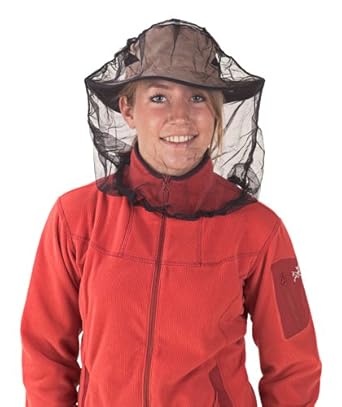
    If someone wants to cover themselves in moose dung and spaghetti-os to repeal mosquitoes and ticks, be my guest, but we are talking about preventing horrible diseases and maintaining a certain level of enjoyment and sanity in the outdoors. Until something proves to be as effective and safe as DEET, I’ll keep doing what I’m doing.

    Mosquito Netting

    This is the only effective non-chemical way to repeal mosquitoes that I'm aware of.

    Poisonous Plants

    VM: Can poisonous plants keep spreading if contacted with the rest of your gear?

    I’m not the best source for this question, because I believe I’m one of the lucky immune few, so I haven’t done a lot of research on the subject.

    Nevertheless, the answer is yes. It is possible for the plant oils that cause the allergic reaction, called urushiol, to get on your gear and spread to other people or other parts of your body. You have to come in contact with the urushiol, however, to have the allergic reaction.

    Once you have rinsed the affected area of your skin, you’ll no longer be able to spread it. It can stick to gear pretty well though, and may still be able to cause an allergic reaction a year later. Washing the gear with a grease-cutting soap is probably your best bet. Dawn Dish Soap is the cheapest and easiest to find on the trail.

    Of course, it’s best to avoid it in the first place. Learn to identify the plants. Remember the old adage, “Leaves of three, leave them be.” That’s a good place to start as leaves on both Poison Ivy and Poison Oak have three leaflets.

    Also watch out for any plants with: shiny leaves, hairy leaves or stems (check under the leaf as well), or any plant with red stems, twigs, branches, or red hairy vines. Also avoid any plant that has a milky sap, umbrella-like flower, or pungent smell.

    If walking through an overgrown area, wear long sleeves and pants. If you're highly allergic, consider carrying an ivy block barrier.

    For more information on this topic, please check out the poison ivy page at the American Academy of Dermatology web site.
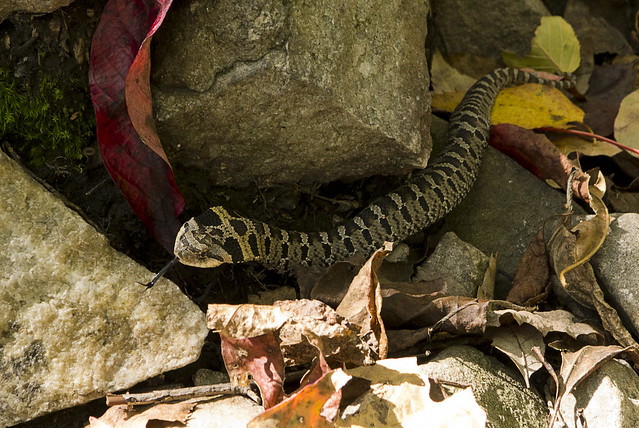
    (Photo: Unidentified Snake)
    Other Pests

    Snakes

    I only saw one venomous snake on the Appalachian Trail. I nearly stepped on a Timber Rattler in near Delaware Water Gap. I was on Rattlesnake Mountain at the time, so I guess it shouldn't have been a surprise.

    I'm not a snake expert, but you can prevent confrontations by avoiding tall grass, watching your step, and checking before you stick your hand into a crevasse. If you're cowboy camping under the stars, avoid sleeping near their territory: beside a log, in tall grass, or along rock crevasses. Keep your tent zipped up when you're not around.


    Shelter Rodents

    Other than mosquitoes, the most common annoyance with pests on the trail is the theft of food and the damage done to your gear when they are trying to get to your food. Not just shelter rodents, but bears, porcupines, possums, and raccoons as well. This is preventable though.
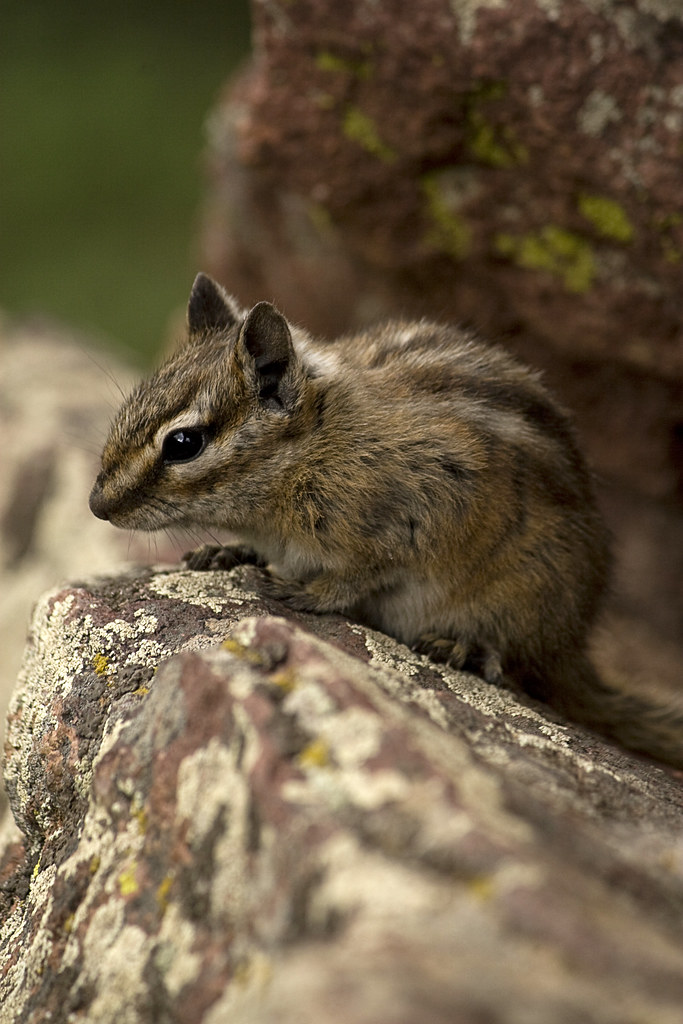
    Nearly every shelter will have ropes on the ceiling to hang your food. They'll have something like a tin can halfway up the rope to keep rodents from crawling down to your food bag. Always use these or hang your food in a tree or bear pole.

    If you leave your gear behind even for a few minutes, something might come by and chew a hole into your backpack. This happened to me on the Wonderland Trail. If you set your pack down for an extended amount of time, carry your food with you. I use a homemade drawstring backpack for food now, so I can easily carry it with me if I want to leave my gear behind while I go down a side trail or summit a mountain.
    Black Bears

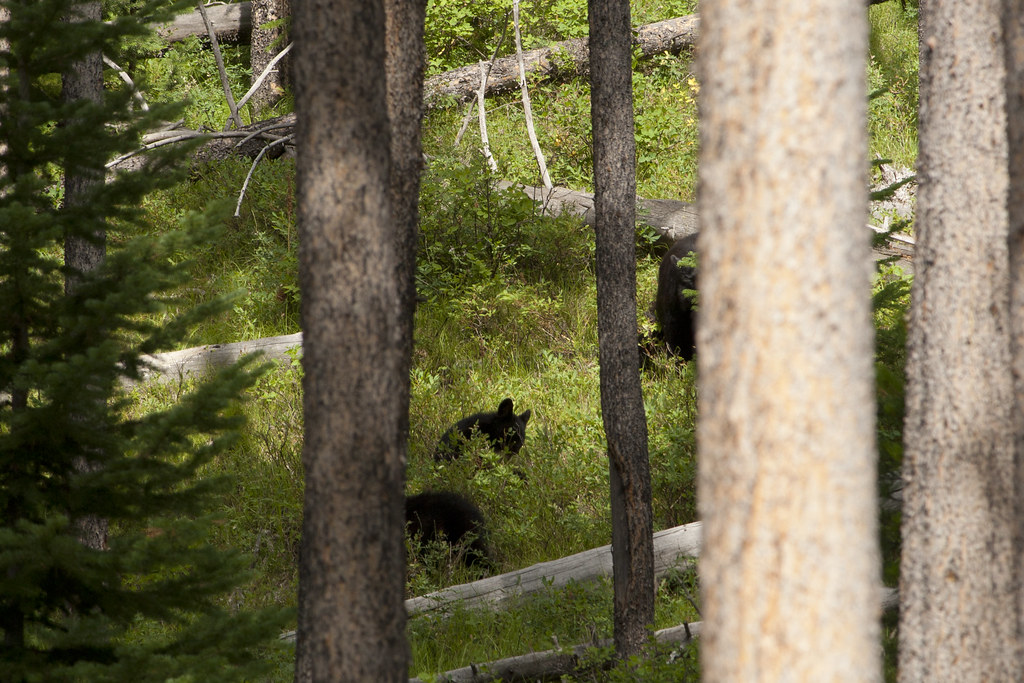
    This could be it's own post, but I'll be brief. I don't generally classify a bear as a pest, but I do classify anything that can rip open your pack and eat your food as a pest. To prevent issues, remember these simple rules...

    Black Bears (which are the only bears you will encounter on the AT) are very skittish and will generally run away if they hear you coming. Don't surprise them though, or they may react defensively. Before turning a corner, or cresting a hill, make noise by singing or talking. Bear bells or clicking your trekking poles together might have some effect, but are not as effective as the human voice.

    When camping in bear country, hang your food and other scented items from a tree or bear pole at least ten feet above the ground. Never cook or store food near your tent and keep a clean camp or shelter.

    The highest concentration of bears on the Appalachian Trail is in the Delaware Water Gap area (around the border of New Jersey and Pennsylvania) and Shenandoah National Park, so be extra cautious in those locations.

    For more information and what to do if you encounter a Black Bear, check out the National Park Service's bear safety tips.


    More Q&As with Victor:

    Weather and Morale on the Appalachian Trail
    Shelters Vs. Tents on the Appalachian Trail
    Knives on the Appalachian Trail
    Hiking with Visitors on the Appalachian Trail
    Online Mail Drops on the Appalachian Trail
      
    Creative Commons License
    A Backpacker's Life List by Ryan Grayson is licensed under a Creative Commons Attribution-NonCommercial-NoDerivs 3.0 Unported License.   

    Sunday, March 24, 2013

    Photography: Mount Rainier from the Wonderland Trail


    I took this photo in Mount Rainier National Park while hiking the Wonderland Trail in 2012. You can support my blog by ordering a print in my Etsy store. Use coupon code 5OFF2013 and receive $5 off any purchase of $15 or more.

    THE STORY BEHIND THE PHOTO...

    As I ventured to the north side of the Wonderland loop, it seemed more and more like I hopped into the pages of a children’s illustrated book of fairy tales. A land created by artists, not natural processes. Wildflowers bloomed everywhere and lush green plants and moss grew everywhere else.

    At Mystic Lake, my view of Rainier was as close as ever. I got a better feel for how massive it is. I could now see cliffs of ice, several stories high, which formed where immense glaciers cracked and tumbled down the mountain. Eventually, I was close enough to see the thin meandering trails left by mountaineers climbing to its peak.

    After setting up camp in a thick pine forest, I leaned against a log, ate dinner, and read a book. Through the trees, I heard pops, bangs, and cracks coming from Rainier. I wondered if the melting glaciers were cracking apart or if the swelled creeks from the melting snow and ice were tossing huge boulders downstream like billiard balls.

    Soon, the crack of lightning joined the percussive sounds coming from Rainier. The sky above me still had a lot of blue behind nonthreatening white clouds, but Mount Rainier is so big it has its own weather.

    It is definitely one of Earth’s great mountains.

    The next morning I walked out of the pines and got this gorgeous open view. I stopped for a photo. An adventurous older man walked by and stopped. After we shared a silent moment staring at Rainier, I asked, "You ever think of hiking to the peak?"

    He looked at the mountain reverently as though contemplating it for a bit then exhaled and said, "No."

    "I think I do," I said.

    Even though I crossed the Wonderland Trail from my life list, I added "Climb to the Top of Mount Rainier." Will this list ever get any shorter? If I don't stop adding to my list of things to do before I die, I don't think I'll ever get around to dying.
      
      
    Creative Commons License
    A Backpacker's Life List by Ryan Grayson is licensed under a Creative Commons Attribution-NonCommercial-NoDerivs 3.0 Unported License.   

    Sunday, March 17, 2013

    Photography: Chipmunk Near Trail Ridge Road

    Rocky Mountain National Park, Backpacking, hiking, camping, nature, photography

    I snapped this photo in Rocky Mountain National Park near Trail Ridge Road. Prints of this photo can be purchased in my Etsy store.  Use coupon code 5OFF2013 to receive $5 off any purchase of $15 or more.

    THE STORY BEHIND THE PHOTO...
    A friend and I took a trip to Rocky Mountain National Park right after they opened Trail Ridge Road, the highest highway in the USA. The road reaches a height of 12,183 feet. At just over 11,000 feet we pulled over at a turnout to stretch our legs and look at the view.

    We were high above the treeline and the road had only been cleared for tourists for a couple days, yet dozens of chipmunks still knew right where to go to flash their big glossy eyes at snack-carrying tourists.

    I don't feed the animals, as it's rightfully against the park rules, however another motorist did. I saw that it was about to happen, so I got my camera ready. I walked by, reached out, and quickly snapped his photograph.

    Little did I know that months later this photo, along with a photo of me, would be on the cover of the Indianapolis Star. It won first place in their 2010 Travel Photo Contest and was feature in numerous sites online. Consequently, this is my most viewed photo to date.

    Is it strange that a part of me wishes the chipmunk knew how much people like his picture?
      
    Creative Commons License
    A Backpacker's Life List by Ryan Grayson is licensed under a Creative Commons Attribution-NonCommercial-NoDerivs 3.0 Unported License.   

    Thursday, March 14, 2013

    Photography: Mountain Goat at Hidden Lake

    Mountain Goat at Glacier National Park Hidden Lake, Backpacking, Camping, Hiking, Nature, Photography

    My 500th post! Here is another picture from Glacier National Park that you can download for your computer's desktop. Prints of this photo can be purchased in my Etsy store. Use coupon code 5OFF2013 to receive $5 off any purchase of $15 or more.

    THE STORY BEHIND THE PHOTO...

    In Logan Pass, where snow can drift up to 80 feet high in winter, I pulled off of the Going-to-the-Sun Road to stretch my legs on a 3-mile hike to Hidden Lake. When the lake was in view, the sun was about to tuck in behind the mountains. The color in the sky warmed up a bit and rays of light shone through the clouds and reached between the mountains toward the lake. I setup my tripod for a picture.

    While looking through my camera’s eyepiece, I heard hooves on the rocks behind me. A mountain goat stood a few feet away. It stopped to stare at me. Soon it was joined by another goat, then a baby, then suddenly a half dozen were walking all around me. My camera never clicked so much.

    The goat in this picture walked away from the crowd and just stared out at the view. After I got the shot, he lay on the ground and stayed there long after all the other goats left. It’s as though he only came out for the view and didn't want to leave until the sun fully set. If that were the case, we had something in common.

      
    Creative Commons License
    A Backpacker's Life List by Ryan Grayson is licensed under a Creative Commons Attribution-NonCommercial-NoDerivs 3.0 Unported License.   

    Tuesday, March 12, 2013

    Q&A: Weather and Morale on the Appalachian Trail

    Appalachian Trail, Backpacking, hiking, camping, nature, photography, Tennessee, Snow
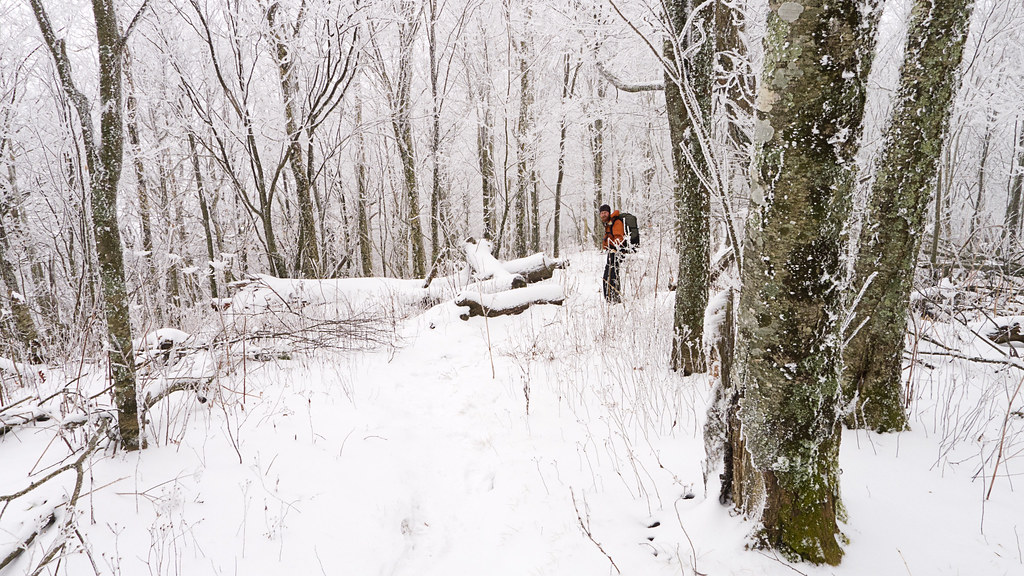
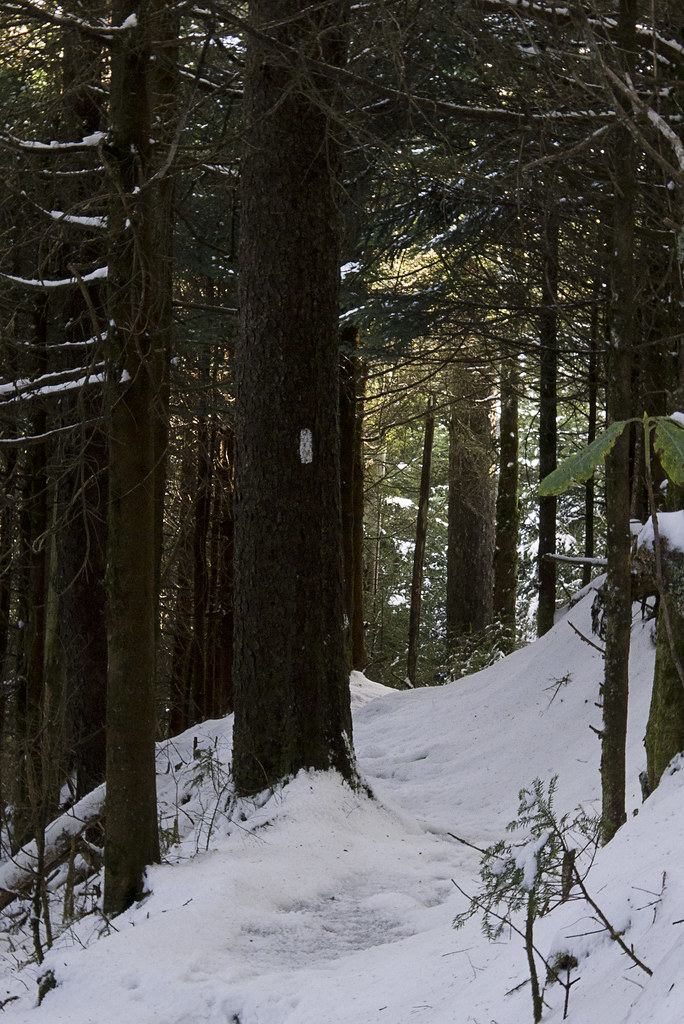
    (Photo: The AT in November, Tennessee)
    Sitting at my computer to write about backpacking helps get me through winter, so I'm happy to report that Victor has more questions about his upcoming thru-hike of the Appalachian Trail. His adventure will begin March 28th, 2013. Follow his progress at BackpackingAT.com.

    VM: Okay, so now that I am in Chicago for the next month and have survived two blizzards with names already, I have been thinking a lot about the snow... Rumor has it we may encounter snow for the first couple of weeks and the last couple of weeks during our hike. Granted it's just frozen rain, but what things should we prepare for (mentally, physically, and with gear,) in terms of making sure we are ready to handle this type of weather?

    Appalachian Trail, Backpacking, hiking, camping, nature, photography, Snow, IceRG: You will likely have to hike in some snow and sleep in freezing temperatures, but since you're hiking the AT from April to August, you’ll probably miss all the heavy stuff.

    The weather usually turns mild in the Smokies by mid-April. It can snow at high altitudes any time of year in New Hampshire and Maine, but their heavy snow doesn't usually fall before October.

    That said, you don't need a blizzard to be concerned about the weather. Hypothermia, for example, is a concern even above freezing temperatures. Know the signs and begin your hike with warmer gear than you think you'll need. It's always best to err on the side of caution in the beginning. Don't worry about the end of your trip right now, because once you made it all the way to New Hampshire, you'll know what to do.

    Even though you'll miss the heavy snow season, you'll still have your fair share of nasty weather. It’s inevitable on such a long trip. You don’t have the luxury of choosing the most pleasant time of year to be in a particular area.

    There were downpours in Maine and New Hampshire that turned the trail into a cascading stream in minutes. I sprinted across mountain balds toward the safety of trees with lightning cracking above my head. We hunkered down in a high mountain shelter while Hurricane Irene decimated the small towns down river. Floods from Tropical Storm Lee knocked down footbridges which forced me to wade through knee-high water and slog through thick mud that threatened to suck the shoes off my feet.

    Appalachian Trail, Backpacking, hiking, camping, nature, photography
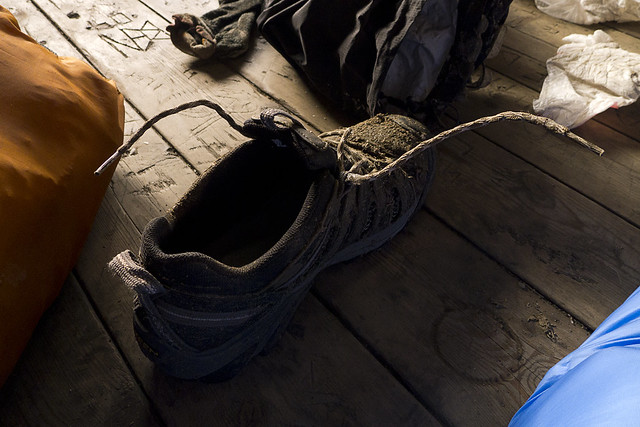
    (Photo: Frozen shoe)
    By December in the Smokies, it got so cold that after I accidentally stepped in a creek hidden under snow and ice, my shoestrings froze instantly. When I got to the shelter, I had to grasp them in my fists to thaw them out before I could take my shoes off my stinging cold feet.

    Surprisingly, I love all of those experiences. They are all  part of the adventure. Anyway, it's not the short-term extreme weather that has the most potential to crush your morale on the AT. It's the long stretches of unrelenting rain, especially when it's cold.

    The good news is there is a lot you can do to keep spirits high. My first tip probably seems a bit obvious:

    Check the forecast every few days...

    Sixteen miles into our day on the Long Trail in Vermont, Red and I stopped at a shelter for water. The forecast said nasty weather was coming our way. We filled our bottles in a creek then sat in the shelter to eat a quick snack. 

    Appalachian Trail, Backpacking, hiking, camping, nature, photography, Snow, Ice
    The sky was dark even though we had two hours until sunset. A light sprinkle started to fall and thunder rolled overhead. 

    “So what do you think?”

    By this point, we could read each other’s minds well enough to leave the next question unspoken, “Do we stay here or head to the next shelter?” It was six miles away and nine to the next road. 

    It was cold and we hadn't seen two consecutive days without rain in two weeks. My injured knee ached worse than ever. Needless to say, my morale was low.

    I wanted to stop for the night, but the forecast said the worst of the storm would begin at midnight and continue through the following day. There would be high winds and heavy rain until temperatures dropped below freezing. By morning, there would be sleet, ice, and possibly snow. It was too late to get to the road before dark and even though hitching is easy during the day, nobody has ever offered to pick me up at night. 

    “If we go to the next shelter, we’ll only have three miles to hike in the morning then we can wait it out in town.”

    So that’s what we did. Since we knew the forecast, we were able to avoid the worst of the weather and get our spirits back up. If I'm remembering this right, we ended up staying with someone in a social house at Burlington University during pledge week.

    That leads me to my second bit of advice:

    Treat morale as though it needs to be nurtured as much as health and hunger.

    Appalachian Trail, Backpacking, hiking, camping, nature, photography, Snow, Virginia
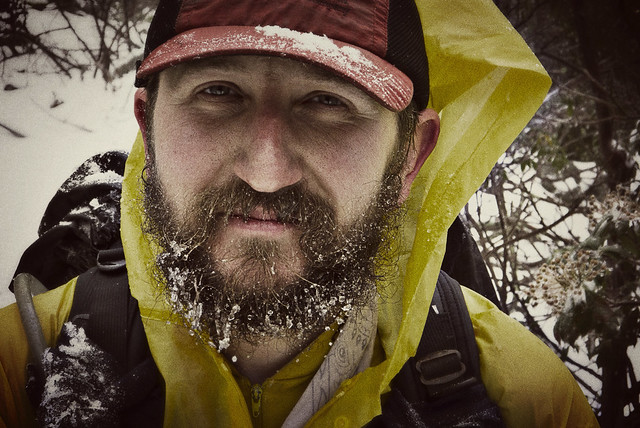
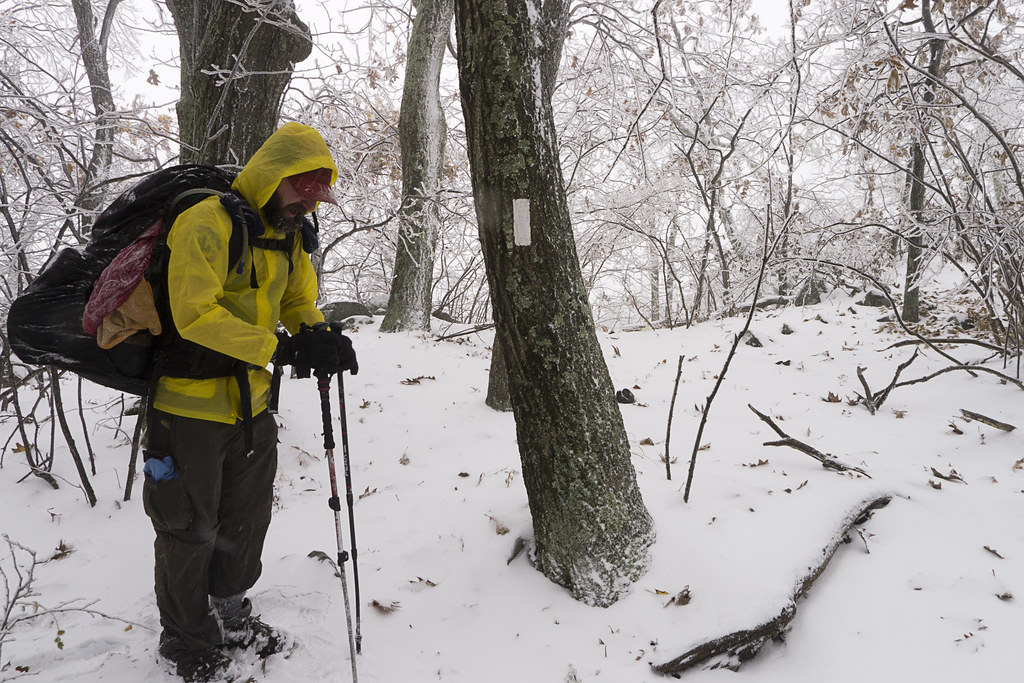
    (Photo: Lightfoot's Frozen Beard, October in Virginia)
    Thinking of the number of miles you have to Maine can be daunting at times, especially in bad weather. Try to only focus on getting to the next resupply town. And remember that on such a long trail, nothing stays the same very long. The terrain and weather could be different the next day. Here are a few other ways to help morale on the trail:

    • Carry an extra day of food if bad weather could be headed your way. You may want to have the option to take a day off or wait out a morning rain storm.

    • Hitch into town. If a long stretch of rain or cold weather has you down, drying your clothes in a laundromat then eating a hot meal can go a long way to turning that around. Actually when you're living a deprived life on the trail, simple things like that can turn a horrible mood into a deliriously happy one.

    • Share misery with others. Bad weather is a lot easier to deal with when you're sitting in a shelter at the end of the day sharing it with others. It usually just turns into something to laugh at.

    • Sing as you hike like nobody can hear you. There is a good chance nobody can anyway, especially during a hard rain. I sang a lot on the trail. My playlist often included Driting by Pearl Jam, King of the Road by Roger Miller, Wagon Wheel by Old Crow Medicine Show, and for some reason Fat-Bottom Girls by Queen.

    • Listen to music on your phone or MP3 player. It has the power to get you up the next mountain or just take your mind off of pain and discomfort. On a bad day, sometimes I listened to a storytelling podcast like This American Life, The Moth, or NPR's Snap Judgement.

    • Build a campfire.

    • Pack plenty of comfort food. If you're not looking forward to another pot of ramen noodles at the end of the day, your food can do very little to put you in a better mood.

    • Change your gear. If it isn't cutting it or not keeping you warm enough, there are many outfitters along the trail. Of course, it's always best to avoid gear issues before you head to Springer, so here are some suggestions:

    Gear

    In the beginning, if you're not sure what you'll need to stay warm enough, pack extra. You can always send unneeded gear home later or leave it in a hiker box. Being cold is worse than a pack that is one or two pounds heavier, in my opinion.

    Clothing

    The first commandment of backpacking is, “Thou Shalt Not Wear Cotton.” Many inexperienced backpackers have come down a mountain with that commandment metaphorically chiseled in stone. Cotton gets heavy when wet and takes forever to dry.

    Appalachian Trail, Backpacking, hiking, camping, nature, photography, cold, bandanna, backpacker, hiker
    (Photo: Bandanna as a scarf)
    Dress in layers. Your hiker smell will bring tears to people's eyes, so why not dress like an onion too? This will make it easier to regulate your body temperature. I wear merino wool thermals under my regular hiking clothes, and an insulated vest or fleece over that. A quality rain jacket and rain pants are a must in cold weather, too. They won't necessarily keep you dry, but they will help a lot by blocking the wind. I also carry a pair of gloves, sock hat, and I a couple bandannas that I used like scarves to keep my face warm and prevent snow and wind from getting down my shirt collar.

    One final thing about clothes, never let yourself sweat that much in cold weather. Sweat can kill if the temperature is low enough. It's far better to shed a few layers of clothing before you begin hiking, even if you're a little bit cold at first.

    Waterproof Stuff Sacks and Bag Liners

    On our second day, a fellow thru-hiker slipped while fording our first river in Maine. His bag went into the water. That's when we learned he didn't have anything waterproofed. His sleeping bag, tent, digital camera, and all of his clothes were soaked. The camera never worked again and that night, while trying to dry his clothes over a fire, he burned holes in his socks, shoes, and sleeping bag. To his credit, this seemed to have no negative effect on his mood, but it could have been easily avoided.

    I use a trash compactor bag as a pack liner (click here) and keep my sleeping bag in a waterproof stuff sack for added protection. My camera and other sensitive gear is stored in Ziploc bags. I don't bother with a pack rain cover anymore. I find them to be quite useless except for protecting your backpack while bushwhacking.

    Sleeping Bag

    If you're cold at night, consider replacing your sleeping bag or buying a sleeping bag liner.The latter will only add 5-10 degrees of warmth, but has other benefits as well (click here). For me, sleeping bag temperature ratings are about 15 degrees lower than what I find comfortable, but it's different for everyone.

    Appalachian Trail, Backpacking, hiking, camping, nature, photography, snowWet feet

    Hiking for days with wet feet is not fun, to say the least. I usually carry three pairs of socks, so I can be sure to have a dry pair at the end of the day and in the morning. One of the three is a pair of toe sock liners that I wear when my feet get wet. Wet socks chafe the tops of my toes until they have been rubbed painfully raw. That was one of my biggest foot issues on the AT. The toe sock liners eliminated this problem.

    You will ford a few rivers and creeks, especially in the north. Since it might be cold when you're up there, consider packing a pair of lightweight shoes to ford in like Crocs. Going barefoot in some of these boulder-filled creek beds is a broken ankle waiting to happen and you don't want to soak your only pair of hiking boots on a cold day. Crocs are cheap, light, and available in many stores along the way.

    Daytime temperatures never dropped very far below 25 degrees when I was on the AT, so I never really had cold feet until I got to camp. It doesn't take long to realize how cold it is once you stop moving and nightime temperatures got as low as 15 degrees. It's good to have a dry pair of socks ready to put on.

    Drying Your Socks

    Before bed, I dry out the wet pair by first wringing them out as best I can. I spread a camp towel out on the ground, put my socks on top, and then roll them up like a burrito... a repulsive, smelly burrito. Then I squeeze that or walk on it to draw the water out of my socks and into the towel. This works best if you carry a super-absorbent camp towel, like this one, or get a shammy at a dollar store to save money. Finally, put the damp socks in your sleeping bag at night and your body heat will dry them out by morning.

    Appalachian Trail, Backpacking, hiking, camping, nature, photography, Snow, gaitersGaiters

    Gaiters can help keep snow out of your shoes, but I have never bothered with them. My friend Lightfoot had some success by just tying his bandannas around the tops of his shoes and ankles. They'll still get wet, but they'll keep the bulk of the snow out. It helps to have a couple safety pins to secure them. Bandannas are one of the most versatile things you can carry and I also use the safety pins to pin wet clothes to the outside of my pack or to a clothesline to dry.

    Waterproof Boots

    I personally avoid waterproof boots or shoes. I can see their utility in more extreme conditions, but when you're hiking all day in the snow or rain, your feet will get wet no matter what shoes you wear. If not with rain water, than with sweat. Waterproof boots can also take longer to dry, so I think it's better to just go with shoes that dry quickly.

    Other tips for Dry Feet

    My friends Sam and Liv showed me that newspaper stuffed into a wet shoe overnight will help dry it out. The paper also works as fire starter and I suppose reading the news, but the news really doesn't belong out there.

    You can put a plastic grocery bag, or even better a bread or tortilla bag, between two layers of socks to keep your feet dry and warm. Not a great solution for hiking all day since it doesn't allow your foot to breath, but it works well at camp or when hiking short distances. If one of those socks is a thin sock liner, it will keep your shoes from being too tight.

    You can do the same with a pair of latex gloves under your regular gloves.

    Appalachian Trail, Backpacking, hiking, camping, nature, photography, Snow, ice
    (Photo: Slippery Trail)
    Hiking on Snow and Ice

    Hiking in snow is considerably more exhausting since it is harder to get traction. Consequently, when planning your day, expect to either hike longer or hike shorter distances.

    Trekking Poles 

    Although an ice ax and crampons are not needed during April and August on the AT, some sections could be hazardous when covered in ice or snow. This is why I recommend trekking poles. They also help you move quicker over snow and ice.

    Appalachian Trail, Backpacking, hiking, camping, nature, photography, Snow, virginia
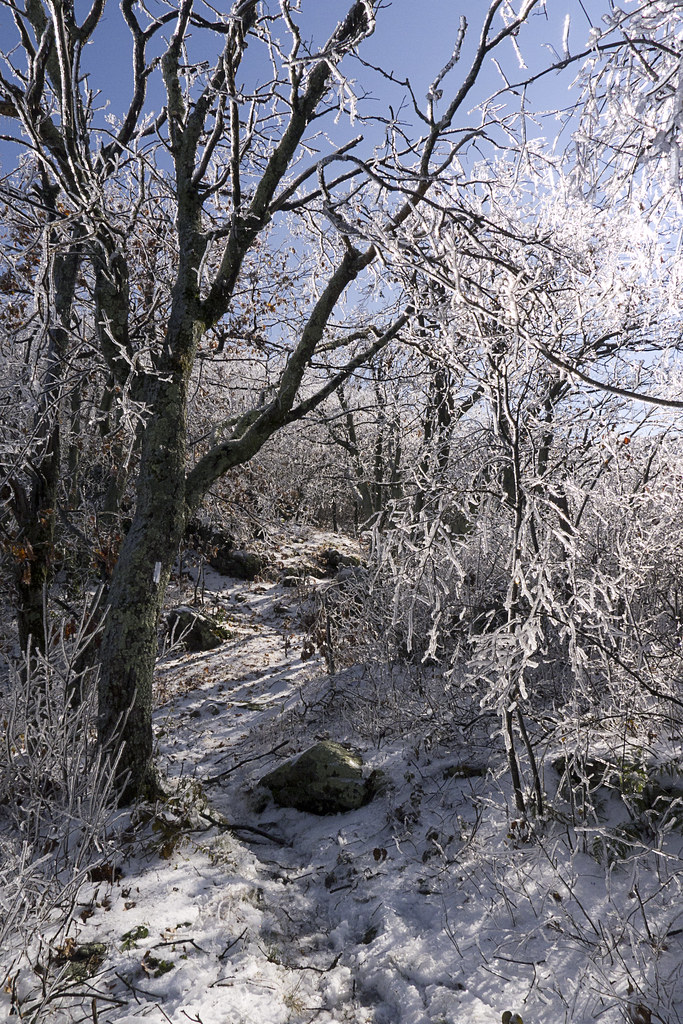
    (Photo: The AT in Late-October, Virginia)
    Other suggestions

    Pack a hot beverage. It can warm you up quite a bit before bed. In cold weather I think I enjoy the  steaming hot mug in my hands more than the drink itself.

    Pack a few hand warmers, just in case. I never used them during the day, but if the cold kept me awake at night, I would place one on my chest or near my feet in my sleeping bag. Just don't fall asleep with them directly on your skin or they could uhh... actually just click here and read this short cautionary tale.

    Appalachian Trail, Backpacking, hiking, camping, nature, photography, snow, beard
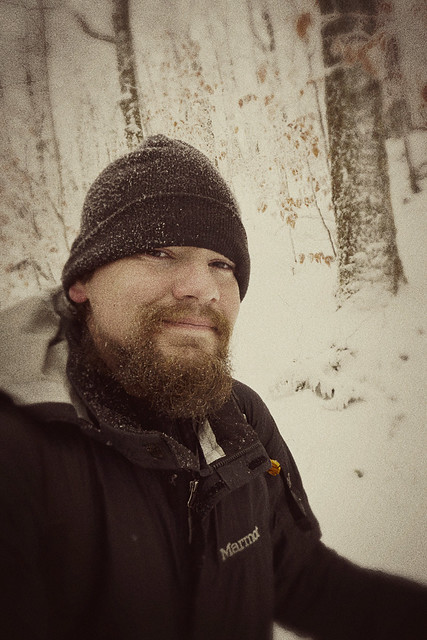
    (Photo: The Beard)
    When it comes to successfully completing the AT, keeping your spirits up on a miserable day is more important than getting the miles you need that day. As long as you haven't allowed yourself to fall too far behind schedule, you'll make up those miles. Whenever you’re calculating the average miles you need to finish by your deadline, subtract a few days from that date, so you won’t feel rushed toward the end. If you do start thinking about stopping, don't make that decision when you're miserable or you might regret it. Take some time off and make the decision when you're happy, warm, and the sky is blue.

    Sorry that was so long, but luckily the extra length means I have room for one more photo. Since I'm talking about snow I'm posting this one of me again. How glorious is that beard? I mean honestly.


    More Q&As with Victor:

    Bugs and other Pests on the Appalachian Trail
    Shelters Vs. Tents on the Appalachian Trail
    Knives on the Appalachian Trail
    Hiking with Visitors on the Appalachian Trail
    Online Mail Drops on the Appalachian Trail
    Creative Commons License
    A Backpacker's Life List by Ryan Grayson is licensed under a
    Creative Commons Attribution-NonCommercial-NoDerivs 3.0 Unported License.
      

    Tuesday, March 5, 2013

    Photography: Helen Lake


    Here is another photo you can download for your computer's desktop. I also took this in Glacier National Park in 2012.

    THE STORY BEHIND THE PHOTO...

    “The guidebook calls it desolate,” said a passing ranger when I told him where I was headed. “But you be the judge.”

    I hiked south along the shore of Elizabeth Lake, passed campsites all occupied with tents, then through wildflowers where butterflies perched. They fluttered about when I passed as though a gust of wind blew the flower petals off and whirled them around me. Beyond Elizabeth Lake, the trail became more overgrown and unkempt.

    As I moved forward, I had to part a sea of tall grasses and green leaves that had grown higher than my waist. Much of the trail would have been invisible if not for a depression in the overgrowth leading the way. The head and back of a deer swam by like the world’s most passive crocodile, followed by two fawns barely able to keep their eyes above the green. I wouldn't call the region desolate, though. I prefer overlooked and secluded, two great qualities for a trail to have.

    I knew I was close when I began to hear the Belly River, which begins at Helen Lake. I stopped to listen to it with my eyes shut. I absorbed every other sound as well, the beating of insect wings, the wind hissing between branches of pine, three different types of birds chirping: some rapid cheeps, some sporadic elongated whistles.

    When I arrived at Helen Lake, I stood at its shore before taking off my pack and setting up camp. I balanced myself on flat rocks to keep the small ripples from soaking my feet and snapped this picture. Lush green hills and the sheer rocky face of Ahern peak, 3,700 feet above me, enclosed the back half of the lake. Ribbons of water from the melting Ahern Glacier fell over and down the mountainside accumulating in the clear blue pool.

    Only four extra miles from the crowded Elizabeth Lake campsites to Helen Lake, and I’m all alone. That’s the real reason this site is overlooked and isolated, the extra miles. The solitude was worth every additional step.

      
    Creative Commons License
    A Backpacker's Life List by Ryan Grayson is licensed under a Creative Commons Attribution-NonCommercial-NoDerivs 3.0 Unported License.   

    Saturday, March 2, 2013

    Photography: Going to the Sun Road


    Here is a free photo you can download for your Windows desktop. I took it in Glacier National Park in 2012. If you're using Internet Explorer or Firefox, just right-click the photo and click "Set as background." Chrome users can download the photo by right-clicking it and selecting, "Save image as."

    Prints of this photo can be purchased in my Etsy store.

    THE STORY BEHIND THE PHOTO...
    If you're only going to have one road go through the heart of Glacier National Park, it's only fitting if the project is big and the result is stunningly beautiful. This was successfully accomplished in 1932 with the grand opening of the Going-to-the-Sun Road. 

    During a three-month road trip out west last summer, I just finished a week backpacking through Glacier National Park. I wasn't looking forward to leaving, but I still had my drive out on the infamous road to look forward to.

    Its allure has compelled many filmmakers to shoot footage of the road for their movies. It can be seen in the opening credits of “The Shining,” as Jack is presumably driving to the Overlook Hotel. It also appears in a scene in “Forrest Gump.” When Forest reminisces with Jenny about running across the United States, he says, "Like that mountain lake... it was so clear, Jenny. It looked like there were two skies, one on top of the other." The footage was of him running on the Going-to-the-Sun Road in front of a lake after the sun dropped below the mountains. The sky was that shade of blue that lingers around a bit before turning completely black. A field of golden grasses is swirling around in the wind.

    I've seen that movie a dozen times and every time I watched that scene I thought of my own dream of living a nomadic life. I wanted my life to be that simple. Could I find myself in such beautiful places at such the right time?

    The road is only 53 miles long, but I stopped so much that dusk loomed with several miles left to drive. I needed one last photo of the sunset. I looked up at the sky anxiously while I drove, waiting for the perfect spot. There wasn't much time left. The road took a bend to the right, then left, and I saw that scene above.

    The section of road was under construction, so I parked my beaten down Honda between bulldozers on a makeshift parking lot made for the construction vehicles. I grabbed my camera. Since I felt like I might have been trespassing, I sprinted up the road and through the field until I was standing in a good spot.

    I was in the right place, at the right time.

    The anxiety of not getting a good photo before sunset melted away. I felt satisfied with the images now hidden away in the camera that I clutched to my chest as I ran back to my car. I drove out of the park that night and headed toward my next adventure.